Cycle Barn and the Battle for Fair Motorcycle Laws
Cycle Barn and the Fight for Fair Motorcycle Legislation
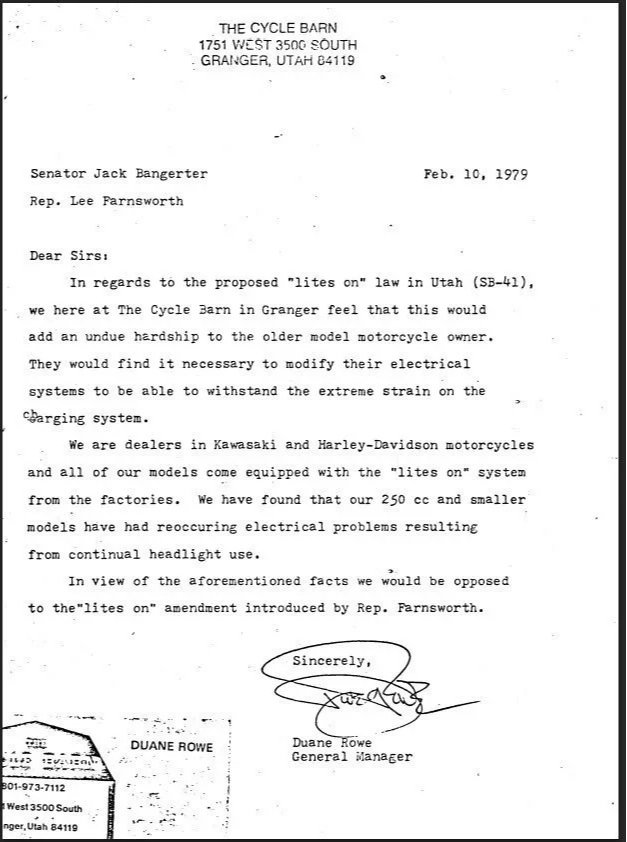
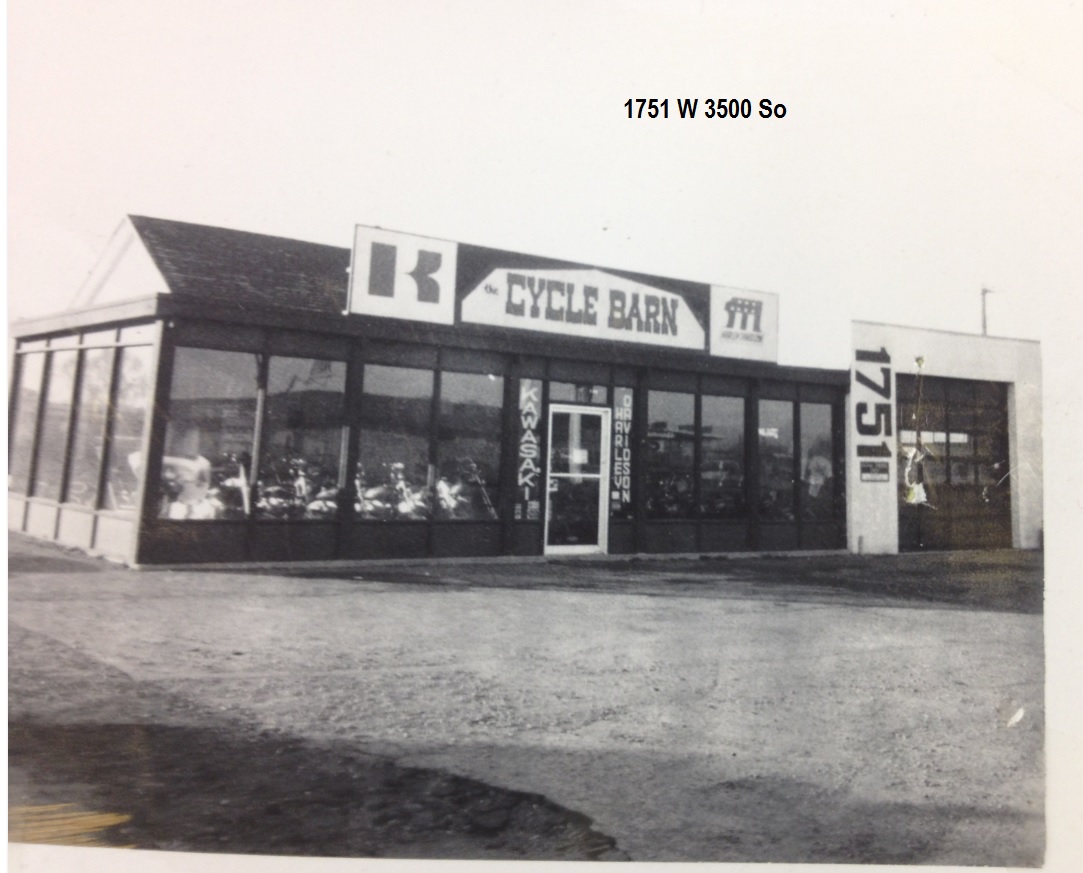
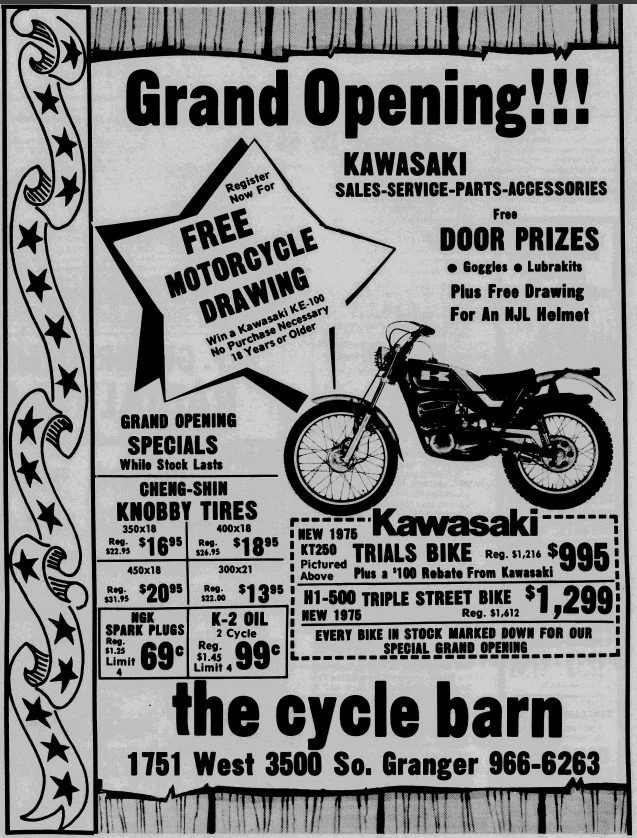
During the late 1970s and early 1980s, Duane Rowe, owner of Cycle Barn in Granger, Utah, became an unexpected voice in state motorcycle legislation. What began as a small family-run dealership at 1751 West 3500 South evolved into a center of local motorcycle culture—and eventually, a place where policy and passion intersected.
When House Bill No. 542 was brought before Utah’s Highways and Transportation Committee, it sought to require all motorcycles—including antique models—to comply with modern headlight and taillight standards. The proposal drew concern from collectors and small dealers across the state, many of whom felt the rule would unfairly burden owners of vintage bikes.
Duane Rowe was among those who spoke out. His written statement to the committee reasoned that “most of these machines are antiques and were not designed for such prolonged electrical use.” He explained that few of these motorcycles were even still in operation, and that forcing owners to modify them would not only be costly but would reduce their historical and collectible value.
In 1979, Duane’s thoughtful letter opposing Utah’s “lights-on” amendment—Senate Bill 41—was circulated beyond Utah’s borders. His argument was later referenced in Montana’s legislative discussions five years later, where similar regulations were under review. Duane wrote:
“We are here at the Cycle Barn in Granger feeling that this would add a unique hardship to the older model motorcycle owners. They would find it necessary to modify their electrical systems to withstand the extreme strain on the charging systems. We are dealers in Kawasaki and Harley-Davidson motorcycles, and all of our models come equipped with lights-on systems from the factories. We have found that our 250 cc and smaller models have had recurring electrical problems resulting from continual headlight use. In view of these facts, we would be opposed to the lights-on amendment.”
Duane’s advocacy represented not only his customers but also a generation of riders who valued both innovation and tradition. His letter stands as a small but meaningful example of how local business owners helped shape practical, balanced legislation during a transformative period in Utah’s transportation history.