The Rowe Family’s Cycle Barn – 1751 W 3500
Cycle Barn – A Family Passion for Motorcycles and Adventure
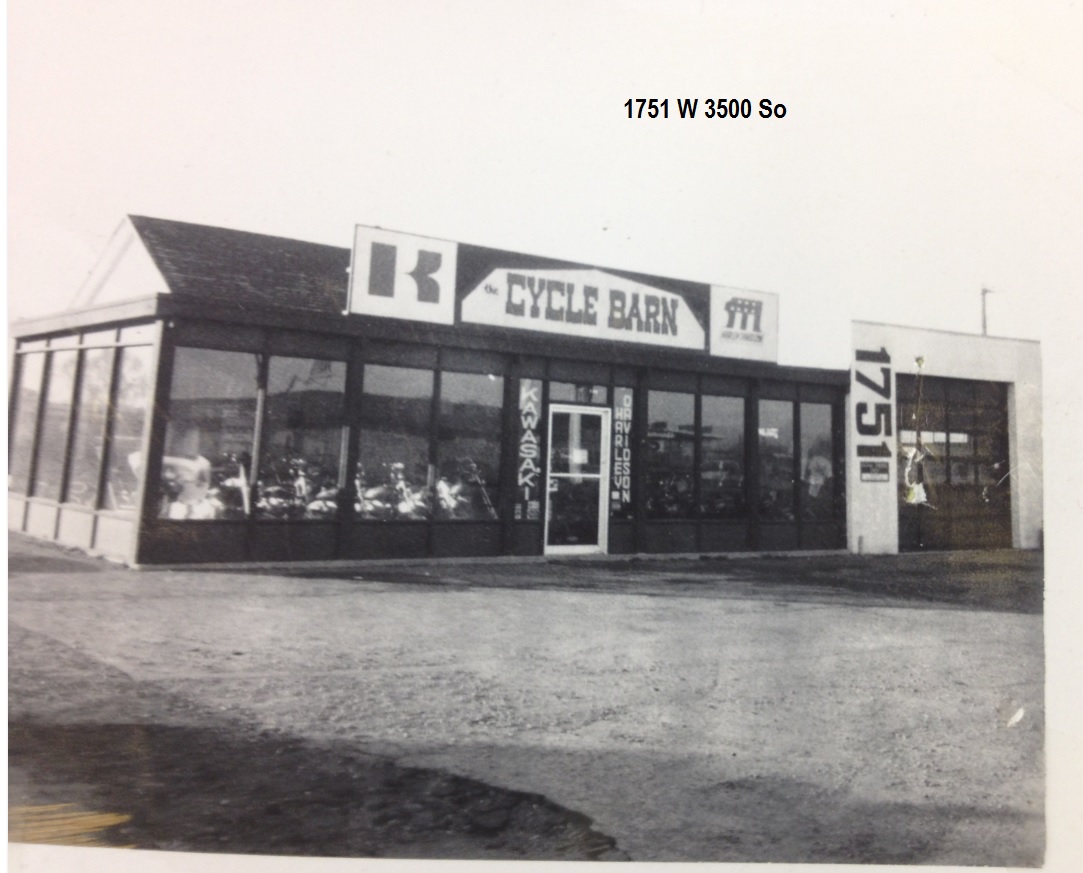
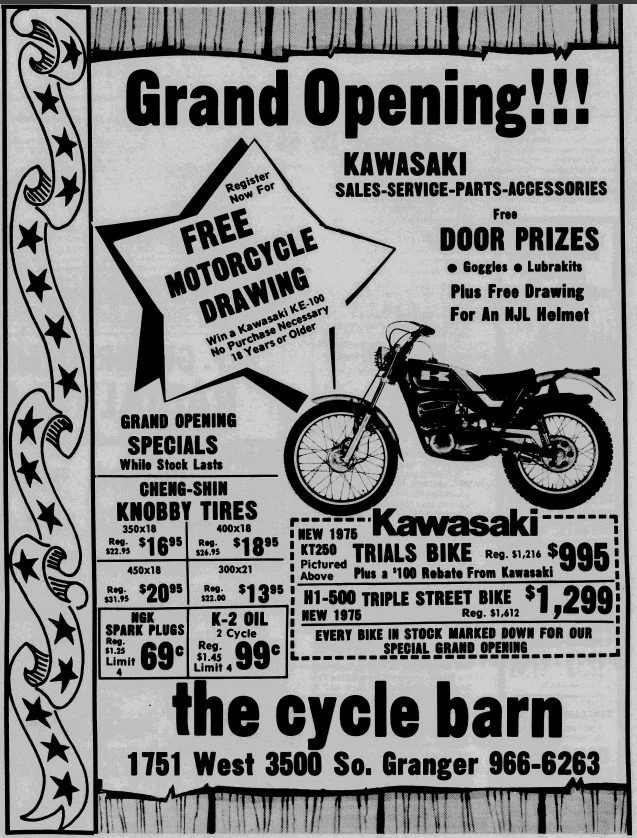
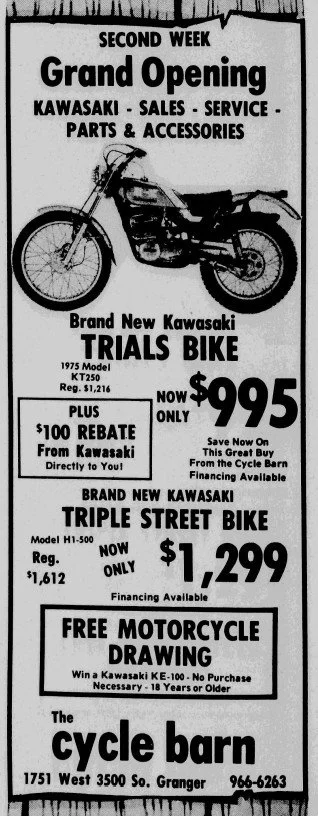
In 1976, Duane and Rose Rowe, along with their family, opened Cycle Barn at 1751 West 3500 South in Granger, Utah. Having moved from Connecticut to Utah in 1971, the Rowes quickly fell in love with their new home. As Rose often said, Utah was “the best place to grow up”—especially for an active family like theirs.
Cycle Barn became a hub of excitement for local motorcycle enthusiasts. The shop was a dealer for Kawasaki and Harley-Davidson motorcycles, serving both seasoned riders and adventurous newcomers. Duane’s mechanical skill and approachable personality made Cycle Barn a welcoming place for customers, racers, and families alike.
For the Rowe children, the shop was more than just a business—it was part of growing up. Weekends often meant pulling weeds, cleaning up the lot, and learning the value of hard work. Yet there was always time for fun and adventure. When not at the shop, the family could be found riding through the open fields, attending the legendary Widowmaker Hill Climb, or spending evenings at Rocky Mountain Raceway watching the races or competing in BMX events.
Cycle Barn operated through the late 1970s and into the mid-1980s, becoming a memorable part of Granger’s commercial landscape for nearly a decade. Even after its closure, the Rowe name remained fondly associated with the spirit of Utah’s motorcycle community.
After closing the shop, Duane relocated to Sandpoint, Idaho, but those who remember the hum of engines and the smell of new rubber on 3500 South still speak with nostalgia about Cycle Barn—a place where adventure, family, and community came together..

In addition to running Cycle Barn, Duane Rowe became a respected voice for Utah’s motorcycle community. In the late 1970s, he spoke out during state legislative hearings on motorcycle lighting laws, explaining that older and collector models were never designed for continuous headlight use. His well-reasoned letter to lawmakers emphasized both safety and preservation, and it was later referenced in Montana five years later. Duane’s advocacy reflected the same care and integrity that defined his work at Cycle Barn—protecting riders, preserving history, and keeping the spirit of motorcycling alive.